
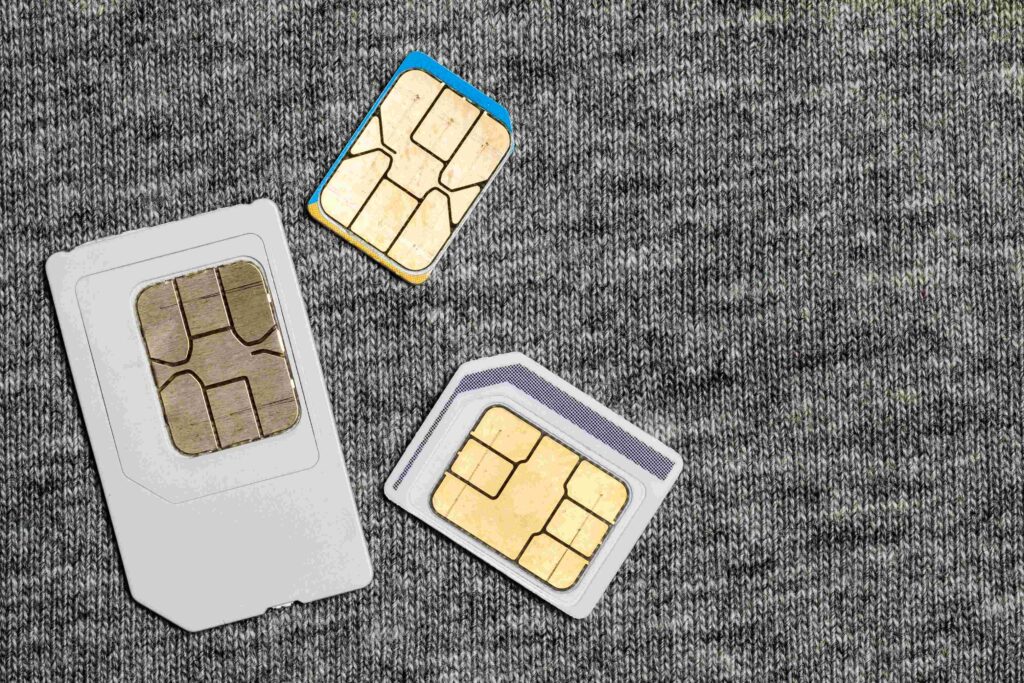
In today's digital age, mobile phones have become an essential part of everyday life, allowing us to stay connected with others, access the internet, and navigate through the world with ease. Behind this connectivity is a small but crucial piece of technology: the SIM card. While most people use their phones daily without giving much thought to SIM cards, understanding what they are and how they work can help us appreciate the intricate system that makes modern mobile communication possible.
What is a SIM Card?
A SIM card (Subscriber Identity Module) is a small, removable smart card that is inserted into mobile phones and other devices to provide cellular network access. The SIM card stores information that uniquely identifies the subscriber to the network, including the user's phone number, service plan, and other network-specific data. The card itself contains a microprocessor, which enables the phone to connect to the mobile network and authenticate the user’s identity.
The History of the SIM Card
The concept of the SIM card dates back to the early 1990s, with the first SIM cards being introduced by the European Telecommunications Standards Institute (ETSI) as part of the GSM (Global System for Mobile Communications) standard. Before the SIM card, mobile phones were often tied to a specific carrier, and it was difficult to switch service providers. The introduction of SIM cards allowed users to easily switch between phones and carriers by simply transferring the card, which revolutionized mobile communication.
Types of SIM Cards
Over the years, SIM cards have evolved in size and functionality. There are several types of SIM cards, and the one used in your device depends on the model and technology used. The most common types include:
-
Standard SIM Card: The original size of the SIM card, now largely obsolete in most modern smartphones.
-
Micro SIM Card: A smaller version of the standard SIM card, introduced to accommodate the increasingly compact designs of smartphones.
-
Nano SIM Card: The smallest form factor, used in most modern smartphones. It is about 40% smaller than the micro SIM.
-
eSIM (Embedded SIM): Unlike traditional SIM cards, an eSIM is embedded directly into a device and cannot be removed. It allows for greater flexibility, enabling users to switch networks without physically changing the SIM card. eSIM technology is gradually becoming more common in smartphones, tablets, and wearables.
How SIM Cards Work
A SIM card contains a small microprocessor, which communicates with the mobile phone and the carrier’s network. The key function of the SIM card is to store your International Mobile Subscriber Identity (IMSI), a unique identification number assigned to each mobile user. When you insert your SIM card into a phone and turn it on, the device communicates with the network’s base stations to authenticate your identity using the IMSI. Once authenticated, you can make calls, send texts, and access the internet, depending on your service plan.
In addition to the IMSI, a SIM card stores other information such as:
- Authentication keys: These are used to secure communication between the device and the network.
- Phonebook contacts: Some 數據漫遊 s allow users to store contacts directly on the card.
- Text messages: Older SIM cards could store SMS messages, though most modern phones now store them in internal memory.
- Service provider information: Your carrier’s network settings and preferences are often saved on the SIM.
Importance of SIM Cards
The SIM card is crucial for a number of reasons:
- Network Access: It allows users to access the mobile network, whether for voice calls, texts, or internet browsing.
- Security: The SIM card helps secure your communication by storing encryption keys and ensuring that only authorized users can access the network.
- Portability: By removing the SIM card and inserting it into another compatible device, users can easily switch between phones without losing their phone number or service.
- Global Roaming: When traveling abroad, a SIM card allows you to access local networks by either using international roaming or purchasing a local SIM card for cheaper rates.
Switching SIM Cards and Compatibility
Switching SIM cards is generally a straightforward process. However, there are a few things to consider before swapping:
- SIM Lock: Some mobile phones, particularly those purchased from a specific carrier, may be locked to that carrier’s network. In such cases, the SIM card from another carrier may not work unless the device is unlocked.
- SIM Size: Ensure that the size of the SIM card (Standard, Micro, Nano) is compatible with your device. If not, adapters or a new SIM card may be required.
- eSIM Compatibility: For newer devices that support eSIM, you may need to activate it through your carrier or use a QR code provided by the network provider to switch between operators.
The Future of SIM Cards
The future of SIM cards is moving towards eSIM technology, which eliminates the need for physical SIM cards altogether. eSIMs are smaller, more flexible, and allow for multiple carrier profiles to be stored on a single device. This is particularly beneficial for travelers who may need to switch between different carriers without the need to physically change SIM cards.
With the rise of 5G technology and the increasing demand for connected devices such as wearables and IoT (Internet of Things) devices, eSIMs are expected to play an even more significant role in the future of mobile communication. They offer greater convenience and flexibility, allowing users to easily switch between different carriers or data plans with just a few taps.
Conclusion
In summary, the SIM card is a small but essential piece of technology that has revolutionized mobile communication. It serves as the gateway between your device and the mobile network, enabling you to make calls, send messages, and access the internet. Whether it's a traditional SIM card, a micro SIM, or the newer eSIM, this tiny card ensures that we remain connected in a world that thrives on instant communication. With the continued evolution of mobile technology, the SIM card’s role will likely continue to evolve, providing even more flexibility and convenience for users worldwide.